Metal Roofing Panels – Strength, Longevity, and Style for Every Project
High-performance roofing systems engineered for commercial, industrial, and post-frame applications.
Designed for contractors, architects, and building owners evaluating metal roofing systems for commercial, industrial, and post-frame applications.
Quick Roofing Panel System Guide
Need maximum weathertight performance on low slope? Standing Seam
Need lowest cost and fastest install? Exposed Fastener
Need insulation + roof in one system? IMP Panels
Replacing an existing roof without tear-off? Retrofit Systems
Need residential or architectural appearance? Metal Shingles & Tile
What Makes the Right Metal Roofing Panel for Your Project?
Selecting a metal roof panel isn't a single decision — it's a series of them. Slope, span, seam type, substrate, approval requirements, and long-term serviceability all factor in before the first panel leaves the plant.
McElroy Metal manufactures one of the industry's broadest product lines specifically so contractors and specifiers can match the right system to the project, not the other way around.
From high-performance mechanically seamed panels to symmetrical T-seam systems and cost-effective exposed-fastener options, the portfolio covers virtually every commercial and contractor application.
Each system ships from one of McElroy's 14 manufacturing facilities, with a service center network that supports consistent supply and on-the-ground technical help.
Use the sections below to identify which system category best fits your project, then proceed to the product pages, where you'll find full specifications, test reports, installation manuals, and warranty documentation.
How Do I Choose Between Standing Seam and Exposed Fastener Systems?
The most fundamental decision on any metal roof project is the attachment method. Standing seam systems — whether snap-together or mechanically seamed — use concealed clips or fastening flanges that allow the panel to float and move thermally. Fasteners that attach the metal to the substructure don’t penetrate the face of the metal. That matters on commercial jobs where long-term weathertightness, wind uplift ratings, and low-slope performance are specifiable requirements.
Exposed fastener systems attach to the substructure through the panel face using color-matched screws. They cover more area per panel, install faster, and cost less per square — which is why they're the workhorse of post-frame, agricultural, commercial, and industrial construction. Serviceability and replacement are straightforward. The tradeoff is that through-fastened panels create penetrations that require maintenance on long-term applications.
Neither is inherently better. The right answer depends on slope, panel length, budget, building geometry, approval requirements, and how the building will be used over its service life.
Why Choose McElroy Metal
McElroy Metal is 100% employee-owned, which means the people manufacturing and supporting your order have a direct stake in getting it right.
The manufacturing network spans 14 facilities and 29 Service Centers, which means regional supply availability and lead times that matter on commercial timelines. In-house engineering support is available for retrofit framing design, custom panel requirements, and project-specific specification questions. Technical library resources — installation manuals, test reports, FM approval documents, CAD files, submittal data sheets, and weathertightness warranty documentation — are all available on the company website.
For architects and specifiers, the technical library and AIA continuing education program provide the documentation depth that commercial specifications require.
McElroy Metal’s Roofing Portfolio
At McElroy Metal, we offer one of the broadest product lines in the industry—everything from concealed-fastened standing seam systems to exposed-fastener panels, metal shingles, and insulated panels.
Standing Seam Roof Panels
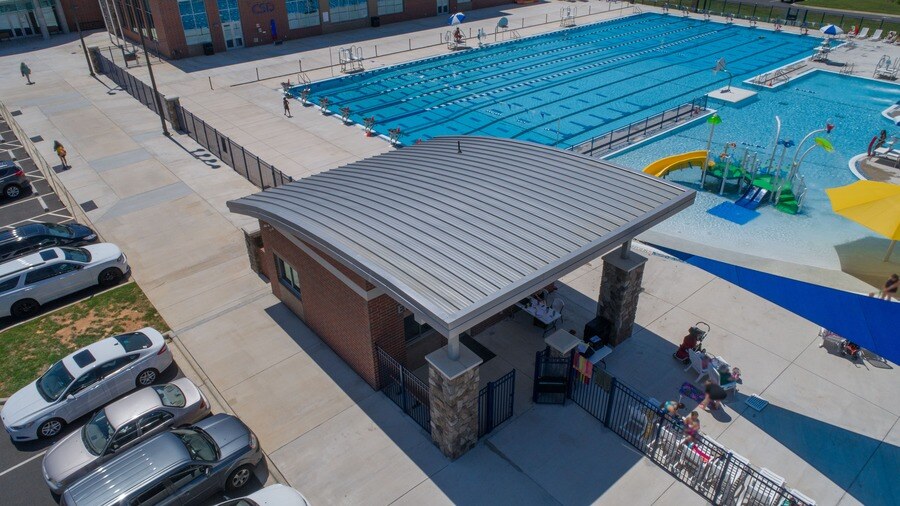
Standing seam panels connect through raised seams — typically 1" to 3" tall — with concealed clips or integral fastening flanges. The floating attachment allows panels to expand and contract with temperature changes, extending system life and maintaining weathertight performance over time. Mechanical seaming creates a fully locked seam; snap-together systems are faster to install and well-suited for moderate-slope and residential-adjacent applications.
McElroy offers snap-together and mechanically seamed profiles across vertical-leg and trapezoidal configurations, with slope ratings from ¼:12 upward, ASTM E1592 & FM4471 approvals on select systems, and jobsite rollforming capability on several panel profiles to provide continuous panel runs up to 250 feet.
Standing Seam Roof Panels
Standing seam panels connect through raised seams — typically 1" to 3" tall — with concealed clips or integral fastening flanges. The floating attachment allows panels to expand and contract with temperature changes, extending system life and maintaining weathertight performance over time. Mechanical seaming creates a fully locked seam; snap-together systems are faster to install and well-suited for moderate-slope and residential-adjacent applications.
McElroy offers snap-together and mechanically seamed profiles across vertical-leg and trapezoidal configurations, with slope ratings from ¼:12 upward, ASTM E1592 & FM4471 approvals on select systems, and jobsite rollforming capability on several panel profiles to provide continuous panel runs up to 250 feet.
Exposed-Fastener Roof Panels
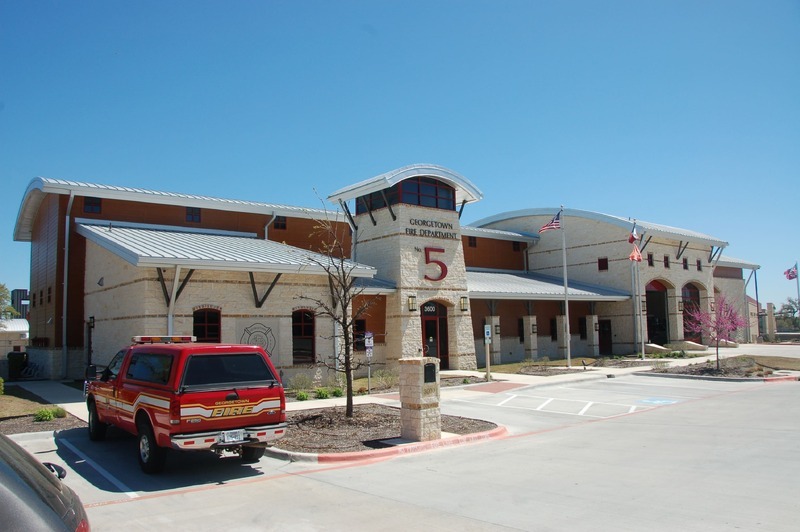
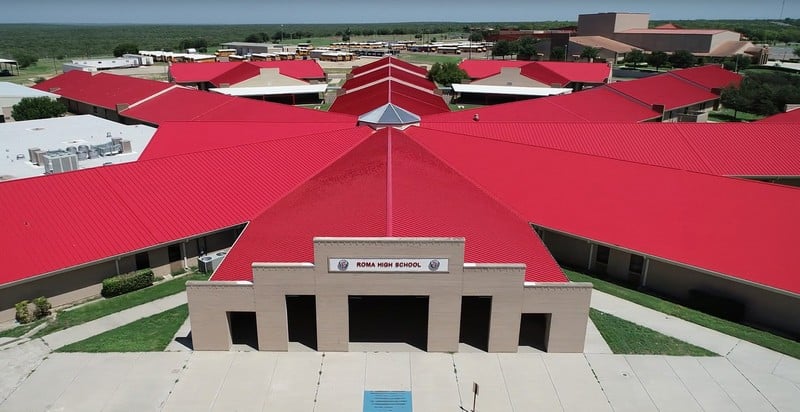
Exposed fastener panels are the most economical metal roofing option for commercial and post-frame construction. Panels attach to the substructure through the face of the metal with color-matched fasteners, typically cover 36" per panel, and can span open framing or be installed over solid deck applications. The wide coverage width reduces both material cost and installation time.
McElroy's exposed fastener line covers the full range of commercial and post-frame applications — from the industry-standard R-Panel and Multi-Rib profiles to the patent-protected Mesa panel and the heavy-duty Mega-Rib for industrial and warehouse spans.
Exposed-Fastener Roof Panels
Exposed fastener panels are the most economical metal roofing option for commercial and post-frame construction. Panels attach to the substructure through the face of the metal with color-matched fasteners, typically cover 36" per panel, and can span open framing or be installed over solid deck applications. The wide coverage width reduces both material cost and installation time.
McElroy's exposed fastener line covers the full range of commercial and post-frame applications — from the industry-standard R-Panel and Multi-Rib profiles to the patent-protected Mesa panel and the heavy-duty Mega-Rib for industrial and warehouse spans.
Insulated Metal Roof Panel
Green Span Profiles, a McElroy Metal joint venture, manufactures IMP roof panels.
IMP systems eliminate separate insulation installation, reduce on-site labor, and provide continuous thermal performance without the thermal bridging common in conventional assemblies. They're well suited for commercial, industrial, and cold storage applications where energy performance and construction speed both matter.
Insulated Metal Roof Panel
Green Span Profiles, a McElroy Metal joint venture, manufactures IMP roof panels.
IMP systems eliminate separate insulation installation, reduce on-site labor, and provide continuous thermal performance without the thermal bridging common in conventional assemblies. They're well suited for commercial, industrial, and cold storage applications where energy performance and construction speed both matter.
Recover and Retrofit Roofing Panel
When an existing roof has completed its service life, a full tear-off isn't always the most economical or practical solution. McElroy's engineered recover systems install a new metal roof directly over the existing assembly — reducing disposal costs, minimizing disruption to building occupants, and delivering a long-term solution that single-ply recover can't match for longevity.
McElroy's recover line covers metal-over-metal, metal-over-shingle, and metal-over-low-slope applications. The 238T Metal-Over-Metal Recover system is frameless and installs over existing panels. The 138T Shingle Recover system uses patented ASV clips to create an Above Sheathing Ventilation airspace that improves thermal performance in the assembly for existing shingle applications moving to metal roofing. The Trap-Tee Recover system addresses the three most common failure points on trapezoidal standing seam roofs — leaking endlaps, low wind uplift, and difficult repairs. The flat and low-slope retrofit framing system adds slope to ponding roofs through engineered subframing.
Under IECC Section C-503, recover systems on commercial buildings may qualify for an energy code exemption that avoids the requirement to bring the entire assembly up to current insulation minimums. That exemption is worth understanding before a tear off and new roofing project goes to bid.
Recover and Retrofit Roofing Panel
When an existing roof has completed its service life, a full tear-off isn't always the most economical or practical solution. McElroy's engineered recover systems install a new metal roof directly over the existing assembly — reducing disposal costs, minimizing disruption to building occupants, and delivering a long-term solution that single-ply recover can't match for longevity.
McElroy's recover line covers metal-over-metal, metal-over-shingle, and metal-over-low-slope applications. The 238T Metal-Over-Metal Recover system is frameless and installs over existing panels. The 138T Shingle Recover system uses patented ASV clips to create an Above Sheathing Ventilation airspace that improves thermal performance in the assembly for existing shingle applications moving to metal roofing. The Trap-Tee Recover system addresses the three most common failure points on trapezoidal standing seam roofs — leaking endlaps, low wind uplift, and difficult repairs. The flat and low-slope retrofit framing system adds slope to ponding roofs through engineered subframing.
Under IECC Section C-503, recover systems on commercial buildings may qualify for an energy code exemption that avoids the requirement to bring the entire assembly up to current insulation minimums. That exemption is worth understanding before a tear off and new roofing project goes to bid.
McElroy Metal’s 138T Shingle Recover System provides a long-term and economical solution for commercial building owners and homeowners. This innovative system installs directly over existing shingles and the patented clips create an energy saving Above Sheathing Ventilation (ASV) airspace between the existing roof and new 138T roof.
McElroy Metal has a patented 238T frameless Metal-Over-Metal recover option that provides a low cost recover solution over existing exposed fastened panels. This system utilizes McElroy's easily repairable symmetrical 238T standing seam panel while providing a long-term solution to existing metal roofs that have completed their service life at a cost that is competitive with single-ply recover and will last two (2) to four (4) times longer.
McElroy Metal’s 138T Shingle Recover System provides a long-term and economical solution for commercial building owners and homeowners. This innovative system installs directly over existing shingles and the patented clips create an energy saving Above Sheathing Ventilation (ASV) airspace between the existing roof and new 138T roof.
McElroy Metal has a patented 238T frameless Metal-Over-Metal recover option that provides a low cost recover solution over existing exposed fastened panels. This system utilizes McElroy's easily repairable symmetrical 238T standing seam panel while providing a long-term solution to existing metal roofs that have completed their service life at a cost that is competitive with single-ply recover and will last two (2) to four (4) times longer.
Metal Shingles and Tile
For projects where owner preference or aesthetic context calls for the look of tile, shake, or slate — but performance requirements rule out the weight and maintenance burden of traditional materials — McElroy offers three options through the Met-Tile, Milan, and Tilcor product lines.
These systems are most commonly used in residential, HOA-driven, or architecturally sensitive applications where traditional materials would otherwise be specified.
Metal Shingles and Tile
For projects where owner preference or aesthetic context calls for the look of tile, shake, or slate — but performance requirements rule out the weight and maintenance burden of traditional materials — McElroy offers three options through the Met-Tile, Milan, and Tilcor product lines.
These systems are most commonly used in residential, HOA-driven, or architecturally sensitive applications where traditional materials would otherwise be specified.
Find a Distributor / Contractor Near You
Whether you’re building a new home or planning renovations, a metal roof can deliver long-term cost savings and comfort. To explore your options and find the product that meets your aesthetic and budgetary needs, contact a McElroy Metal distributor or contractor in your area today. We can’t wait to help make your dream home a reality.

Frequently Asked Questions
The questions below address common considerations and help guide product selection for your project.